

Aluminum Extrusion Service
Custom Profiles · Secondary CNC Machining · Surface Finishing
From custom extrusion profiles to secondary operations such as cutting, CNC milling, drilling, tapping, deburring, and surface finishing, we help transform aluminum extrusion into application-ready components.
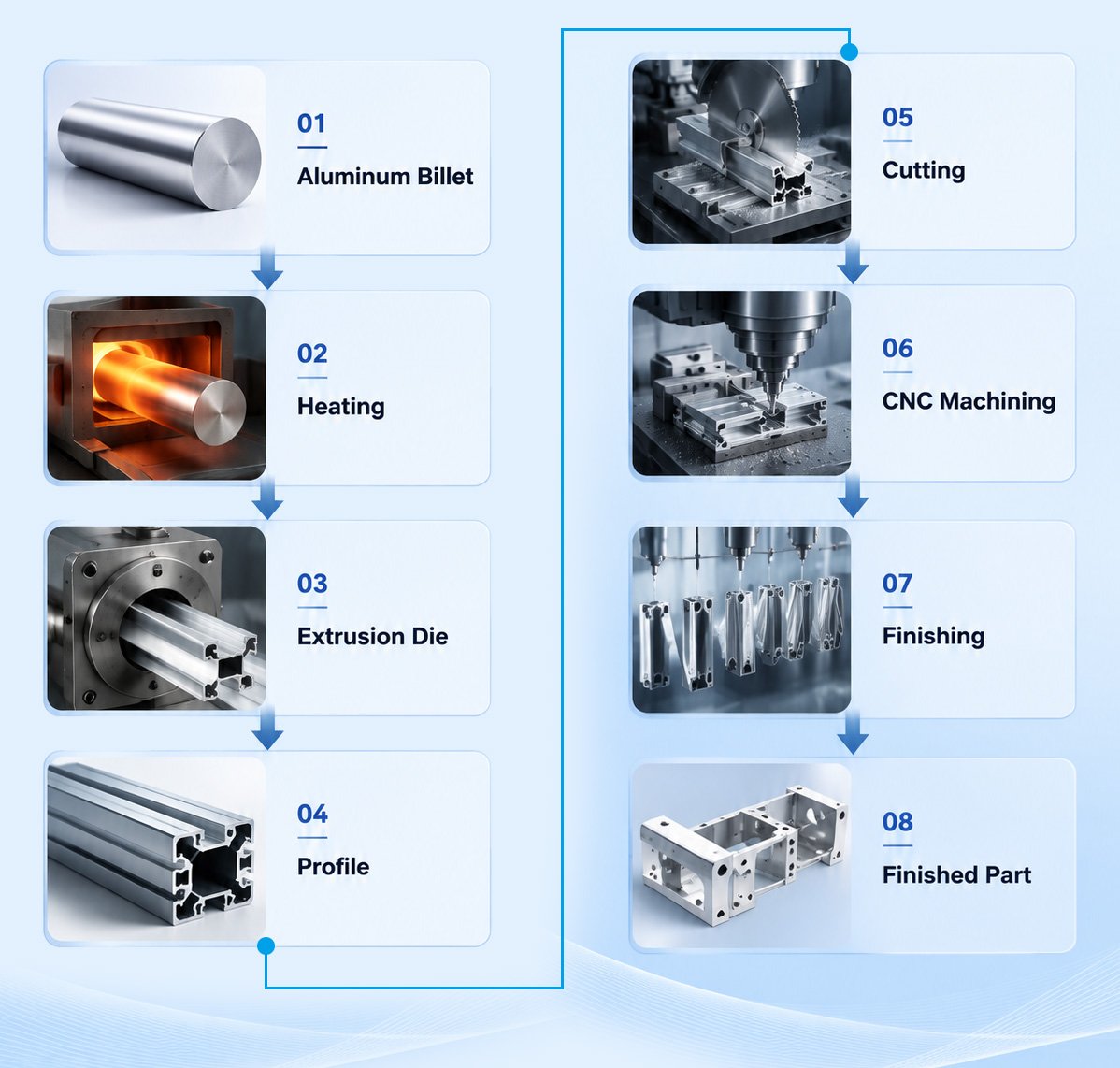
What Is Aluminum Extrusion?
Aluminum extrusion is a manufacturing process in which heated aluminum alloy is forced through a specially designed die to create a continuous profile with a consistent cross-sectional shape.
The extrusion process allows manufacturers to produce complex aluminum profiles efficiently while maintaining a high level of dimensional consistency.
Unlike machining a profile entirely from solid material, extrusion can create the basic cross-sectional geometry first, reducing material waste and machining time for suitable applications.
After extrusion, the profile can be cut to length and undergo additional processes such as:
- CNC milling
- Drilling
- Tapping
- Slot machining
- End machining
- Deburring
- Surface finishing
- Assembly
This makes aluminum extrusion particularly suitable for structural profiles, housings, frames, rails, brackets, heat dissipation components, and other products requiring long or complex cross-sectional geometries.
Custom Aluminum Extrusion Profiles
Standard aluminum profiles are useful for many applications, but custom extrusion allows engineers to create a profile specifically suited to the product design.
RUIBANG CNC supports custom aluminum extrusion projects based on customer drawings and engineering requirements.
Custom Profile Options
- Custom cross-sectional geometry
- Different wall thicknesses
- Internal cavities
- Mounting channels
- T-slots
- Grooves
- Ribs
- Flanges
- Integrated mounting features
- Custom dimensions
Custom extrusion can reduce the amount of material that needs to be removed during subsequent CNC machining and can help optimize the overall manufacturing process.
Designed Around Your Application
A successful extrusion profile is not only about the external shape.
Wall thickness, weight, strength, internal geometry, machining requirements, finishing requirements, and intended application should all be considered during the design stage.
Our team can review your drawings and manufacturing requirements before production.
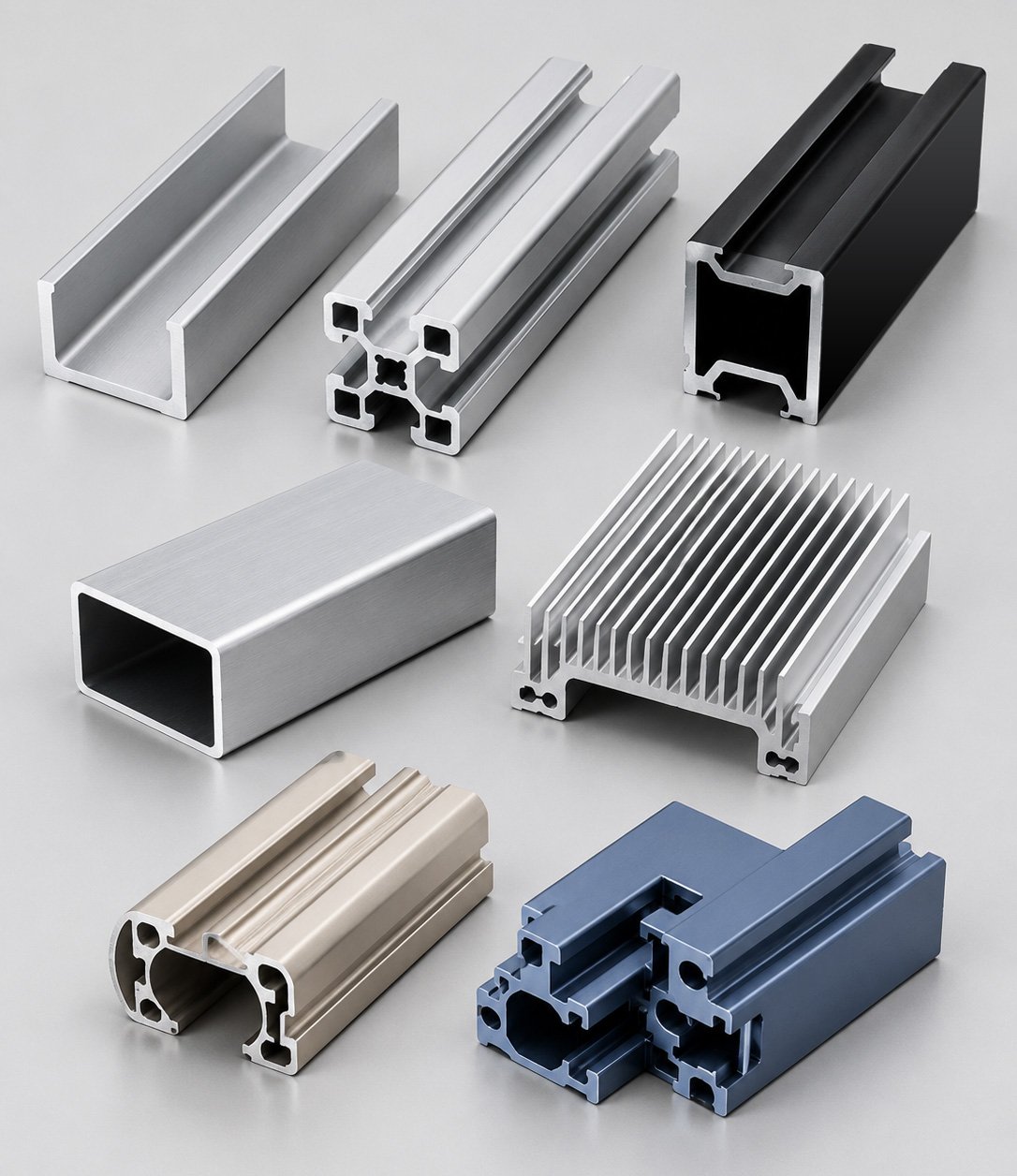
| Alloy | 6063 | 6061 | 6005A | 6082 |
|---|---|---|---|---|
| Strength | ★★★ | ★★★★ | ★★★★ | ★★★★★ |
| Extrudability | ★★★★★ | ★★★★ | ★★★★ | ★★★ |
| Machinability | ★★★★ | ★★★★★ | ★★★★ | ★★★★ |
| Typical Applications | Profiles / Frames | Mechanical Parts | Structural Parts | Engineering Components |
6063 Aluminum
6063 aluminum is widely used for architectural and general-purpose extrusion applications.
It offers good extrudability, surface appearance, corrosion resistance, and finishing characteristics.
Typical applications include:
- Frames
- Housings
- Profiles
- Rails
- Architectural components
- General structural parts
Aluminum Alloys for Extrusion
Different aluminum alloys offer different combinations of strength, corrosion resistance, machinability, weight, and surface finish characteristics.
The appropriate alloy depends on the application and downstream manufacturing requirements.
6061 Aluminum
6061 aluminum provides higher strength and is suitable for structural and mechanical applications where strength and machinability are important.
Typical applications include:
- Machine components
- Structural parts
- Brackets
- Industrial equipment
- CNC machined profiles
6005A Aluminum
6005A aluminum can provide a useful combination of strength and extrusion capability for structural and industrial applications.
6082 Aluminum
6082 aluminum is known for its relatively high strength and is commonly used for structural and engineering applications.